
Attic Mold in Gettysburg, PA: Causes, Signs & Removal
Attic mold is caused by a different mechanism than the basement and crawl space mold common elsewhere in Adams County homes — usually a roof leak, poor soffit-to-ridge ventilation, or winter ice damming that pushes water under shingles, rather than ground-level humidity.
Why attics grow mold differently than basements
Most of what this site covers about why Adams County homes get mold starts at ground level — old masonry basements, ~70% average regional humidity, limited vapor barriers. Attics are a different problem: moisture usually gets in from above (the roof) or from trapped warm, moist air below (the living space) rather than rising ground humidity.
What causes attic mold
- Roof leaks — missing or damaged shingles, deteriorated flashing around chimneys and vents, or aging roofing material letting water into the attic space directly.
- Poor soffit-to-ridge ventilation — attics need continuous airflow from soffit vents (intake) to ridge or gable vents (exhaust) to stay dry. Blocked soffits (often from insulation stuffed too far into the eaves) or missing exhaust ventilation trap warm, moist air against the cold roof deck, where it condenses.
- Ice damming — in winter, heat escaping from the living space melts snow on the upper roof; that meltwater refreezes at the colder eaves, forms a dam, and backs up under shingles into the attic. More common in older, less-insulated homes typical of Adams County's housing stock.
- Bathroom or kitchen exhaust fans vented into the attic instead of outside — a frequent retrofit mistake that dumps humid air directly into the attic space instead of venting it outdoors.
Signs to watch for
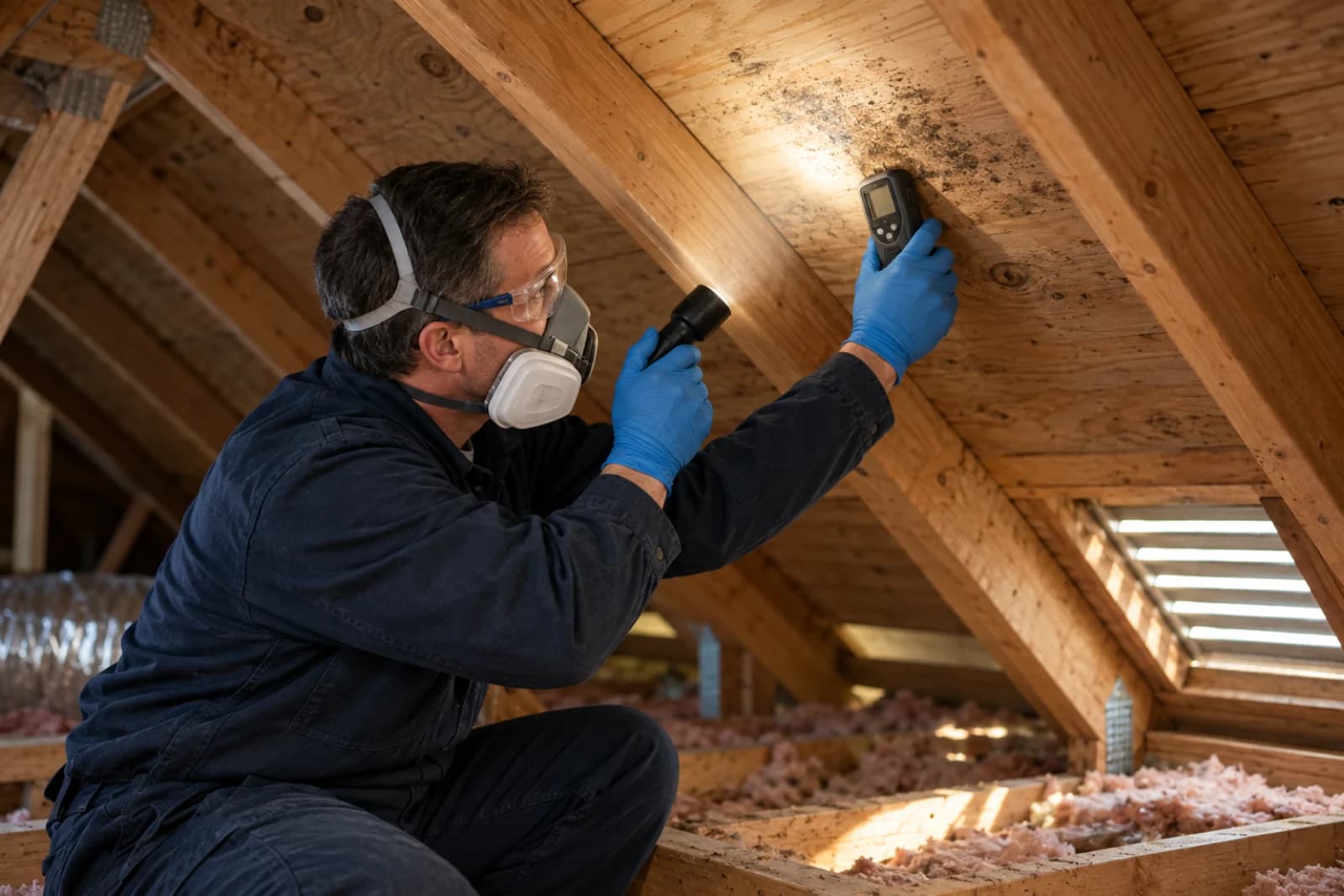
- Dark spotting or staining on roof sheathing (the wood you see looking up between the rafters)
- A musty smell noticeable when you open the attic access hatch
- Visible frost or condensation on the underside of the roof deck in winter
- Water stains on ceiling drywall directly below the attic — often the first sign homeowners notice, since the attic itself goes unchecked for long stretches
What attic mold removal involves
The process follows the same core steps as mold removal anywhere in the home — see Black Mold Removal for the general process — with one attic-specific addition: fixing the ventilation problem or leak that caused it is not optional. Removing attic mold without correcting a roof leak or blocked ventilation path means it returns, often within a season, because the moisture source is still active every time conditions line up.
Typical scope:
- Removing and replacing affected insulation (wet or moldy batt insulation generally can't be cleaned — it gets replaced)
- Treating exposed sheathing and framing
- Correcting the ventilation path (adding or unblocking soffit vents, adding ridge venting) or repairing the roof leak or flashing that let water in
- A final check to confirm the space is clear and properly ventilated going forward
Cost follows the same general range cited for basement and crawl space work elsewhere on this site — roughly $10–$25 per square foot as a national rule of thumb — though no attic-specific published figure exists yet; your actual number depends on roof access, insulation type, and whether ventilation work is needed alongside remediation.
Not sure if it's attic mold or something else?
If you're seeing ceiling stains but haven't been up in the attic to check, Mold Inspection & Testing is the right first step — a visual check from below often misses what's happening above the ceiling line. If the source turns out to be a leak rather than a ventilation problem, see Water Damage Restoration.
Sources: EPA, "A Brief Guide to Mold, Moisture and Your Home" (fix-the-moisture-source-first principle, already cited elsewhere on this site) · Angi / HomeGuide / Forbes Home mold remediation cost guides (the same per-square-foot rule of thumb already used on this site's cost pages — not attic-specific)
Last updated 2026-09-29