
Water Damage Restoration in Gettysburg, PA
Water damage restoration removes standing water, dries affected structures, and repairs leak or flood damage. Per EPA guidance, materials dried within 24–48 hours of exposure generally won't develop mold — making fast response the most effective form of prevention.
Water damage and mold are the same problem at two different stages. Standing water or a chronically damp basement is what starts mold growth in the first place — the sooner water is extracted and the space is properly dried, the less likely mold becomes.
What water damage restoration covers:
- Water extraction (standing water removal)
- Structural drying with industrial dehumidifiers and air movers
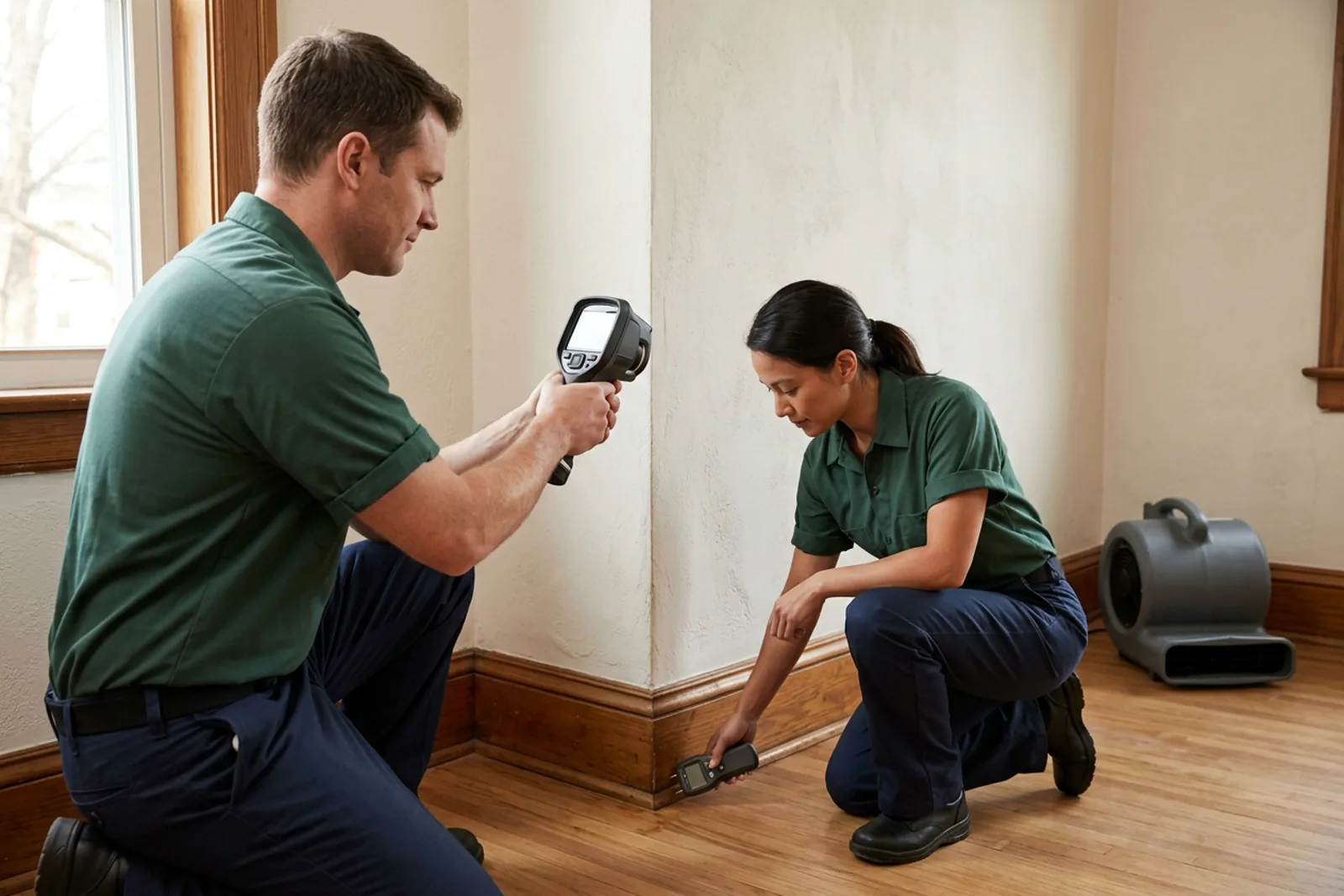
- Moisture mapping to confirm hidden dampness in walls, subfloors, and framing is fully dry — not just surface-dry
- Repair of damaged materials
- Mold prevention treatment where drying alone isn't enough
Why this matters more here: Adams County's climate runs heavy spring and summer thunderstorms on top of a humid continental average near 70%, and much of the local housing stock has masonry basements without modern vapor barriers. A leak or storm-driven basement intrusion in an older Gettysburg-area home has less natural drying capacity than a newer, better-sealed build — which is exactly why response speed matters. Per EPA guidance, materials dried within 24–48 hours of water exposure generally won't develop mold; the slower natural drying in older, less-ventilated construction narrows that window.
If mold has already started, water damage restoration alone isn't enough — see Mold Remediation in Gettysburg, PA or, if it's specifically in a basement or crawl space, Crawl Space & Basement Mold.
Last updated 2026-09-15