
Black Mold Removal in Gettysburg, PA
Black mold (commonly Stachybotrys chartarum) is removed the same way other household molds are — by removing the affected material and fixing the moisture source — but its reputation means most homeowners want a professional inspection first to confirm the mold type before removal begins.
"Black mold" is the mold people search for by name, but the color alone doesn't tell you what species you're dealing with — several common household molds appear dark or black and aren't the toxin-associated species people usually mean. That's why mold inspection and testing is the right first step if you're not sure what you're looking at.
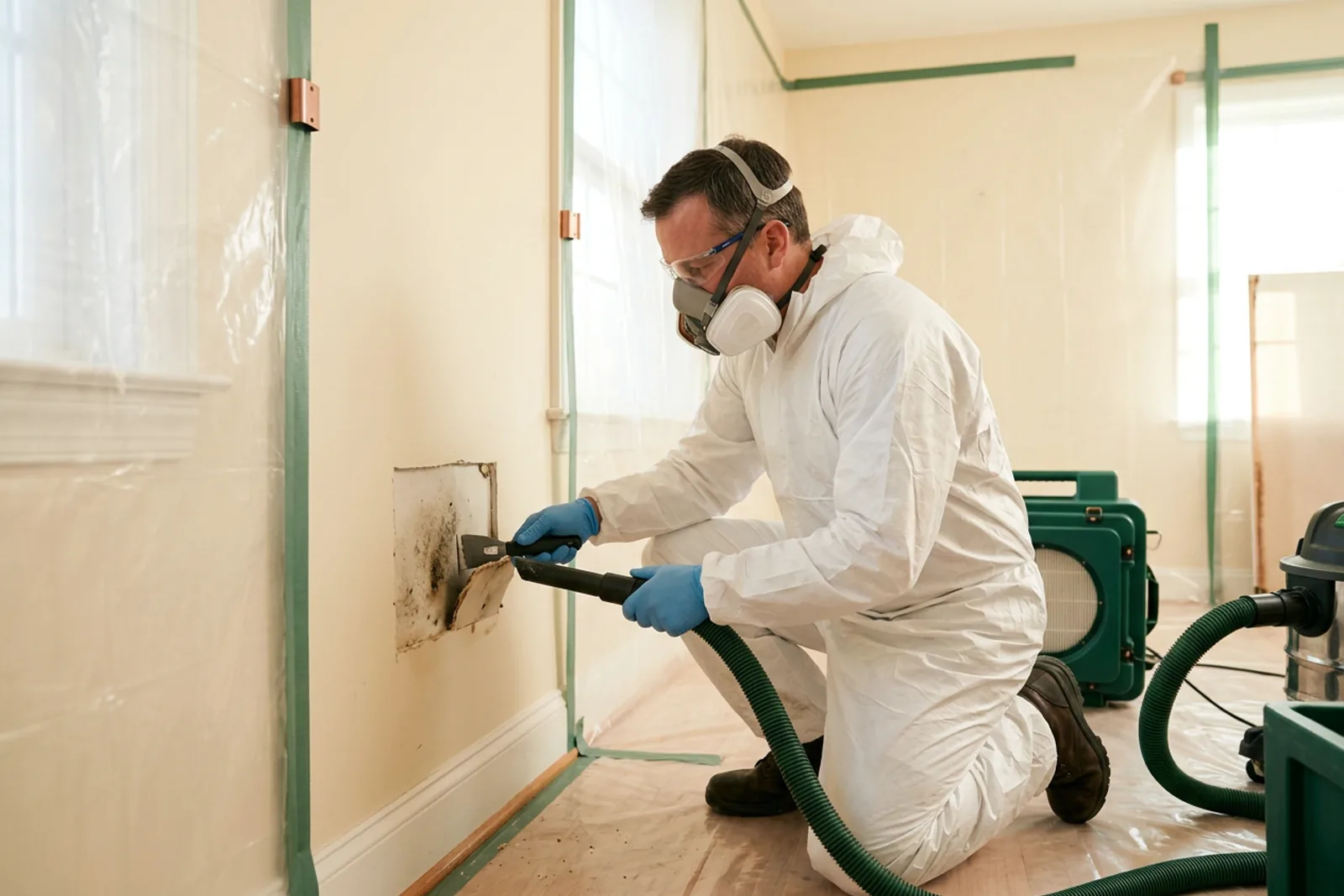
What black mold removal involves:
- Containing the affected area to prevent spreading spores during removal
- Removing porous materials (drywall, insulation, some flooring) that can't be fully cleaned
- Cleaning non-porous surfaces
- Fixing the moisture source — removal without fixing the cause means it comes back
- A final check to confirm the area is clear
On safety: mold exposure affects people differently — some notice respiratory irritation, allergy-like symptoms, or headaches, especially with existing asthma or allergies; others notice nothing. If anyone in the home has ongoing symptoms and visible mold, don't wait on a self-assessment — get an inspection.
Given the concern people bring to black mold specifically, this is a case where hiring right matters more than usual. Pennsylvania doesn't license mold remediation contractors at the state level, so "licensed" isn't something a legitimate company can claim here — instead, check for IICRC-standard training, HICPA registration, and proof of insurance before anyone starts work. Full detail: Mold Remediation in Gettysburg, PA.
Found it in your basement or crawl space specifically? See Crawl Space & Basement Mold — that's where most Adams County mold, black or otherwise, actually starts.
Last updated 2026-09-15